
Collingsworth Court Records After Arrest
After a Collingsworth County jail arrest, the booking record and the court record serve different jobs. The booking side is created by the Collingsworth County Sheriff's Office when a person is received into the Collingsworth County Jail. It can help confirm custody, booking date, the arresting agency, and the charge as entered at intake. The court side begins or develops when the prosecutor files charges and the clerk creates or updates the case file.
Several official channels matter locally. The Collingsworth District Clerk is the local source for district-court records, including felony matters. The Collingsworth County Clerk may be relevant for county-level records, and the Collingsworth County Attorney is the local prosecutor page identified in county sources. If the immediate question is custody or booking status, use Collingsworth County jail inmate records. If the question is a booking photo, use the separate Collingsworth County jail mugshots record path.
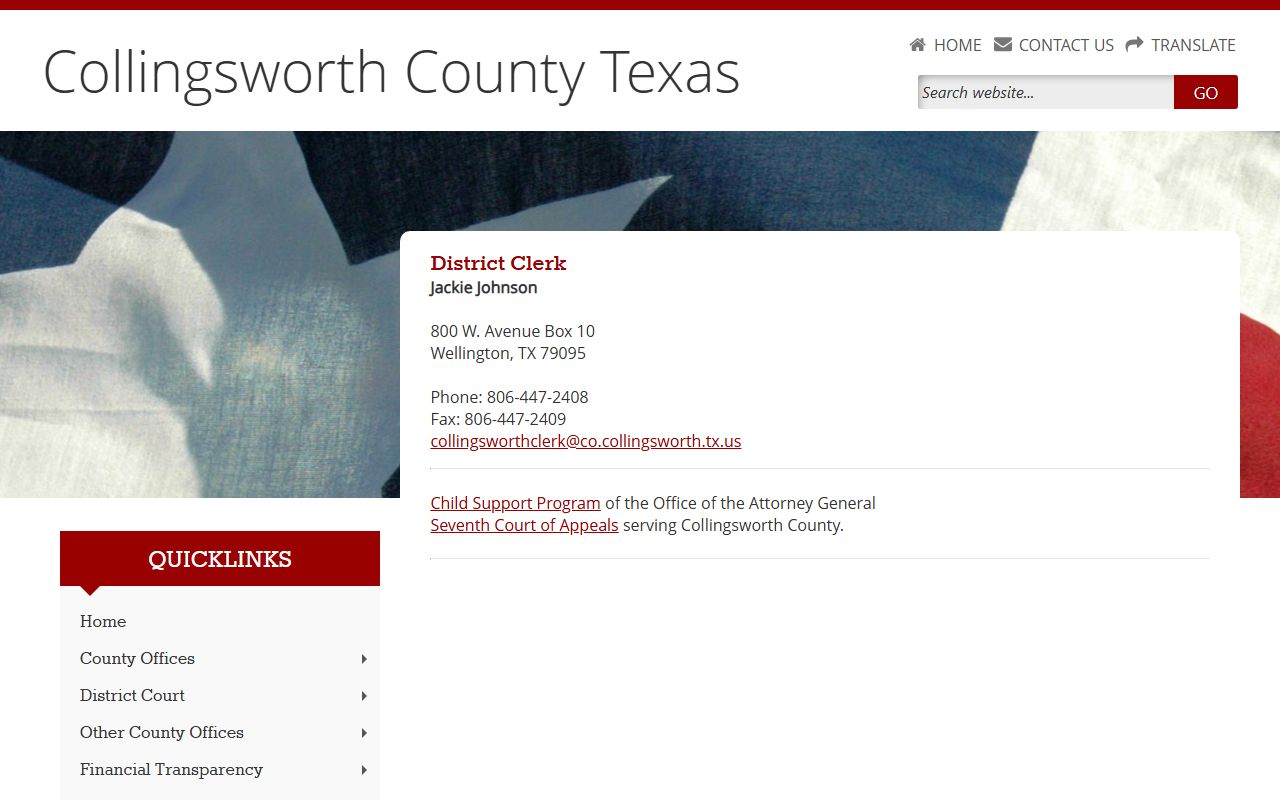
The Collingsworth District Clerk page is the local contact point for district-court case access after a jail arrest.
Find Court Records After Arrest
The statewide Tyler portal, often referred to as re:SearchTX, is the online starting point where participating Texas courts make case records searchable. The Texas Judicial Branch is the statewide court-system source for Texas court structure, but local case access still depends on the court and clerk that maintain the record. The research did not confirm that every Collingsworth County case is available through the portal, so a missing online result should not be treated as proof that no case exists.
| Field Label | Type | Required | Notes |
|---|---|---|---|
| Search / Smart Search | Text | Optional path | Search by party name, case number, or indexed terms where available. |
| Case Number | Text | Optional | Best when a clerk, bond paper, or jail record gives a cause number. |
| Party Name | Text | Optional | Use the defendant's last name and first name. |
| Location / Court | Dropdown/filter | Optional | Availability depends on connected courts and county participation. |
| Date Filed | Date filter | Optional | Helps narrow common-name searches after a known arrest date. |
| Case Category / Type | Filter | Optional | Criminal, civil, family, and probate categories may appear. |
| Search | Button | Required action | Runs the query. |
For Collingsworth County court records after an arrest, start with the person's full legal name and arrest date. If the jail can provide a booking number, warrant number, court name, or cause number, use that detail to narrow the search. When no online case appears, contact the District Clerk for district matters or the County Clerk for county-level records. The Texas Tyler portal is a search tool, not a guarantee that all local case papers are online.
Collingsworth Charging Documents
Charges after an arrest can look different from the first jail entry. An officer may book a person on an arrest charge, but the prosecutor decides what charge to file, whether to amend the allegation, and whether the case should move forward. Texas court records may refer to a complaint, information, indictment, judgment, or disposition. Each term marks a different stage in the case.
| Document | Who Uses It | What It Means | Why It Matters |
|---|---|---|---|
| Complaint | Officer, complainant, or prosecutor | A sworn allegation that may support a warrant or begin a case. | It can connect the arrest to the first court filing. |
| Information | Prosecutor | A formal charge filed by the prosecutor, often in misdemeanor practice and some felony procedure. | It shows the charge the state is choosing to pursue. |
| Indictment | Grand jury | A grand-jury charging instrument for many felony cases. | It can replace or refine the first arrest allegation. |
A judgment or disposition is different. It records how the case ended, such as conviction, dismissal, deferred adjudication, acquittal, or another outcome. A person can have a public charge record without a conviction.
Collingsworth Charge Status Terms
Charge status is the part of the court record that often causes the most confusion after a jail arrest. A charge may be pending at first appearance, amended after review, reduced during plea talks, dismissed by the state, or resolved by trial or plea. The jail's booking charge is not the final word. Collingsworth County readers should compare the jail entry, bond papers, clerk record, and court disposition before drawing a conclusion.
| Status | Plain Meaning | Record Caution |
|---|---|---|
| Pending | The case or charge is still open. | Pending is not a conviction. |
| Amended | The charge wording, count, level, or allegation changed. | Compare the first charge to the current court filing. |
| Reduced | The charge moved to a lower level or different offense. | The original arrest charge may still appear in older records. |
| Dismissed | The charge was dropped or ended without a conviction on that count. | Dismissal does not always erase public records. |
| Deferred adjudication | The court defers a final finding while conditions are completed. | It is not the same as a simple dismissal. |
| Convicted | A plea or verdict resulted in guilt on a charge. | Check sentence, appeal status, and later modifications. |
Bond After Collingsworth Arrest
Bond information may appear in court records after a jail arrest because a magistrate or court decides release conditions in many Texas criminal cases. Texas Code of Criminal Procedure Chapter 17 governs bail and bond decisions, including personal bond and release conditions. For Collingsworth County practice, the research did not locate an online bond-payment portal or a local bond schedule. The practical step is to call the jail at 806-447-2588 and ask whether bond has been set, where payment must be made, and whether a hold blocks release.
| Bond Type | How It Works | Collingsworth County Note |
|---|---|---|
| Cash bond | The full bond amount is paid directly, subject to court handling. | Confirm where payment is accepted before traveling. |
| Surety bond | A licensed bail bond company posts bond for a fee. | Posting bond does not end the criminal case. |
| Personal bond / PR bond | Release is based on a promise to appear and comply with terms. | Conditions may still limit travel or contact. |
| No-bond hold | Release is not allowed on the listed matter or hold. | Parole, out-of-county, federal, or ICE holds may prevent release. |
Warrants Before Court Records
No official Collingsworth County active-warrant online search, most-wanted page, or sheriff app warrant tool was located in the county sources. That matters because a warrant arrest can create a jail booking before a new court setting appears online. A bench warrant may live in the issuing court's file. An arrest warrant may relate to a complaint, and Texas Code of Criminal Procedure Chapter 16 addresses commitment, examination, and related procedures after arrest. A parole or blue warrant can hold a person even when local bond would otherwise be possible.
For warrant questions, call the Collingsworth County Sheriff's Office at 806-447-2588 or contact the court or clerk that issued the warrant. A person who believes an active warrant exists should consider legal counsel before appearing at a law-enforcement office, because arrest may occur at the counter. Public records may show part of the warrant history, but active law-enforcement details can be limited under the Texas Public Information Act.
Note: A warrant arrest and the later court record may use different numbers, dates, and charge labels.
Charges Versus Convictions
A charge is an accusation. A conviction is an outcome after a plea, verdict, or other court finding that results in guilt on a count. Collingsworth County court records after a jail arrest may show both, but they are not the same. Readers should avoid treating a booking charge, pending complaint, or filed information as proof that the person was convicted.
| Record Point | Charge | Conviction |
|---|---|---|
| Stage | Early accusation or formal filing. | Final or resolved finding on a charge. |
| Proof level | May begin with probable cause or prosecutor review. | Requires a plea, verdict, or court finding. |
| Where to check | Complaint, information, indictment, docket, or bond papers. | Judgment, sentence, docket disposition, and clerk record. |
| Public meaning | Can be public but unresolved. | Shows a case outcome unless later changed by appeal or order. |
Sealed and Expunged Records
Texas law uses more than one record-clearing concept. Expunction under Texas Code of Criminal Procedure Chapter 55 can require qualifying records to be destroyed or removed from ordinary public access. Sealing or nondisclosure limits public access but does not always destroy every government record. Eligibility depends on the case result, charge type, timing, and court order.
| Issue | Sealed / Nondisclosed | Expunged |
|---|---|---|
| Public access | Limited for ordinary public searches. | Removed or destroyed as ordered by the court. |
| Agency access | Some agencies may still have authorized access. | Access is far more restricted after the order is carried out. |
| Typical trigger | Eligible disposition and court order. | Eligible arrest or case result under Chapter 55. |
| Practical effect | The record may stop appearing in public searches. | The arrest may be treated as though it did not occur for many public-record purposes. |
Texas Business and Commerce Code Chapter 109 also matters when businesses publish criminal-record information. It addresses duties for certain publishers, but it is not a sheriff mugshot publication rule and does not replace an expunction order.
Public Access Limits
Texas Government Code Chapter 552, the Texas Public Information Act, gives the public a way to request government records unless an exception applies. Section 552.108(c) says basic information about an arrested person, an arrest, or a crime is not withheld under the law-enforcement exception. That supports access to basic arrest information, but it does not mean every police report, investigative file, juvenile matter, sealed record, or booking photo must be released without review.
Important: This privately operated resource is not a consumer reporting agency and must not be used for employment, tenant, credit, insurance, or other FCRA-covered screening.
The Texas Attorney General public-information request guide is useful when a Collingsworth County court or jail record is not online. A narrow request should name the governmental body, identify the person, give a date range, and ask for the specific record needed. The agency may ask for clarification, assess allowed costs under state rules, release non-exempt parts, or seek an Attorney General decision if it believes an exception applies.